Shenzhen Is Paying People to Raise "Lobsters". It's Really Stamping Approval on a New Relation of Production
This subsidy document is a signal: the old way of producing is loosening, and a new way of collaborating has taken its seat at the table.
Translated by AI
Shenzhen is paying people to raise “lobsters”. It’s really stamping approval on a new relation of production
This subsidy document is a signal: the old way of producing is loosening, and a new way of collaborating has taken its seat at the table.
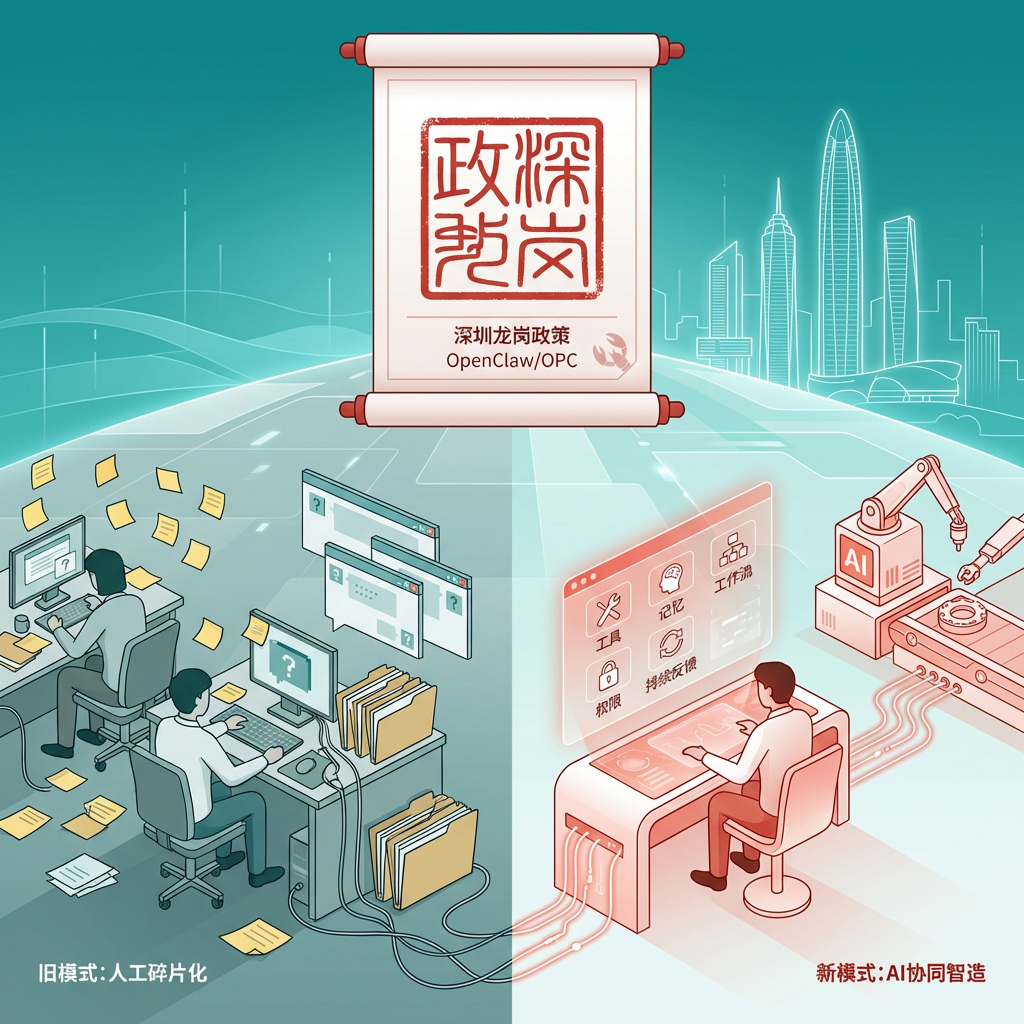
In the past few days, Shenzhen’s Longgang district published Measures to Support the Development of OpenClaw & OPC (Draft for Comment). Many people’s first reaction was simple: the government has started paying people to “raise lobsters” (“lobster” being the Chinese internet nickname for OpenClaw agents). That reading isn’t wrong, but if all you see is “free money”, you’re underestimating the document.
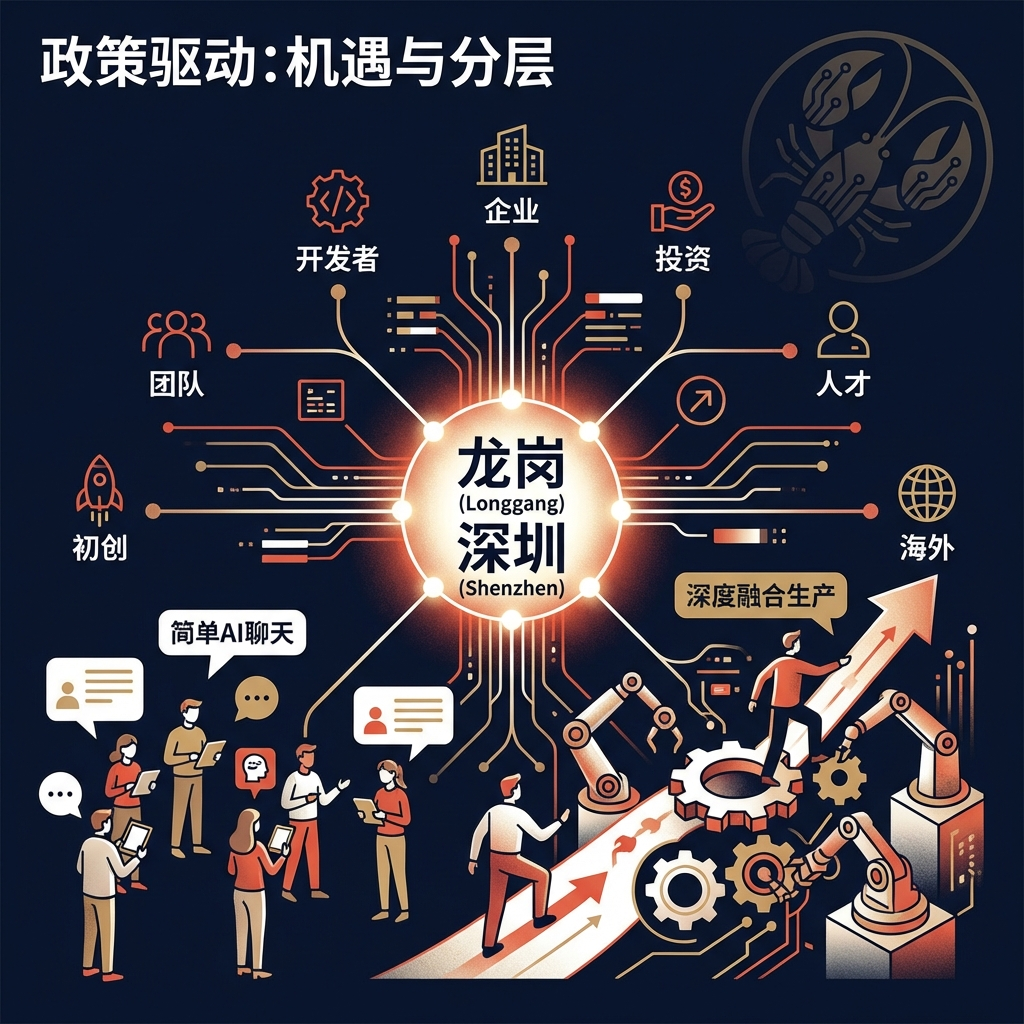
What I find really worth noticing isn’t the subsidy amounts, or the buzzword “lobster”. It’s that what Longgang is supporting is no longer the kind of AI tool you use for a quick chat or a small efficiency boost. It is starting to systematically support something else: AI systems that are coupled long-term with people’s context, collaborative experience and business processes, and that take part in production directly.
These systems are a different species from the AI we got used to over the past two years.
Earlier AI was more like an external brain that could chat, write and answer questions. You used it, it helped, and when the conversation ended you went your separate ways. It was clever, but it never really plugged into your actual workplace. What this policy really recognises is production systems that can take on permissions, call tools, read their environment, remember history, run processes, break down tasks and take feedback. They no longer just help you talk; they help you get work done, and they understand you better the more they work.
So I’d sum up the policy in one sentence: on the surface, Shenzhen is subsidising a tool; underneath, it is stamping approval on a new relation of production.
01 Most people see a subsidy; a few see that the relations of production have already changed
There’s money in this document, of course, and plenty of it.
Contributing key code, developing skill packs or building embodied applications can earn up to ¥2 million;
companies buying or building OpenClaw solutions can get up to 40% of total project investment, capped at ¥2 million per company per year;
AIGC model usage fees can be reimbursed at up to 30% of actual spending;
scenario projects can receive up to ¥4 million;
and seed-stage OPC projects can get up to ¥10 million in equity investment.
Anyone looking at these numbers thinks of opportunity first. But beyond the numbers, there’s another level to pay attention to: what matters isn’t “how much is on offer this time” but “what is being subsidised this time”.
Longgang hasn’t treated this as an ordinary software procurement, a round of short-term demos, or a trend-chasing AI policy. It is supporting the entire chain by which AI enters real production.
The meaning is clear: institutions are starting to take a new collaborative structure seriously.
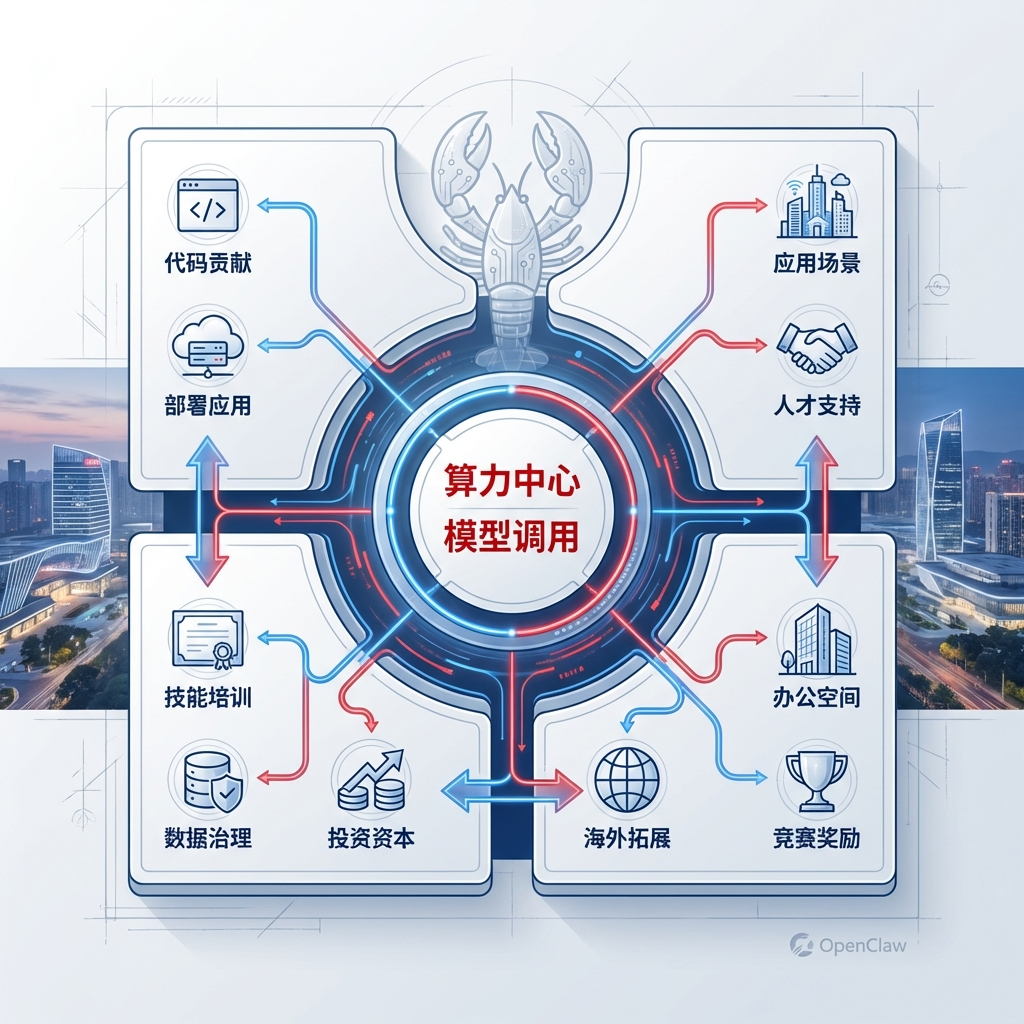
How tasks are broken down, how experience is captured, how systems take over repetitive work, how a team organises higher output with fewer people: things that used to look like avant-garde experiments are now coming into the view of policy.
The real value of a policy often lies not in how much money it gives, but in what it publicly acknowledges.
02 Longgang is supporting an entire coupled AI production chain
Spread the document out and you’ll see it doesn’t touch just one point.
At the front end: free deployment, development and promotion, and incentives for skill packs and key code contributions;
in the middle: data governance, data labelling, booking data as assets, AI NAS;
on the production side: model usage subsidies, compute support, flagship application projects;
on the organisational side: talent subsidies, housing, office space, community operations;
on the capital side: seed funds, industry funds, equity investment;
and for growth: overseas expansion services and competition prizes.
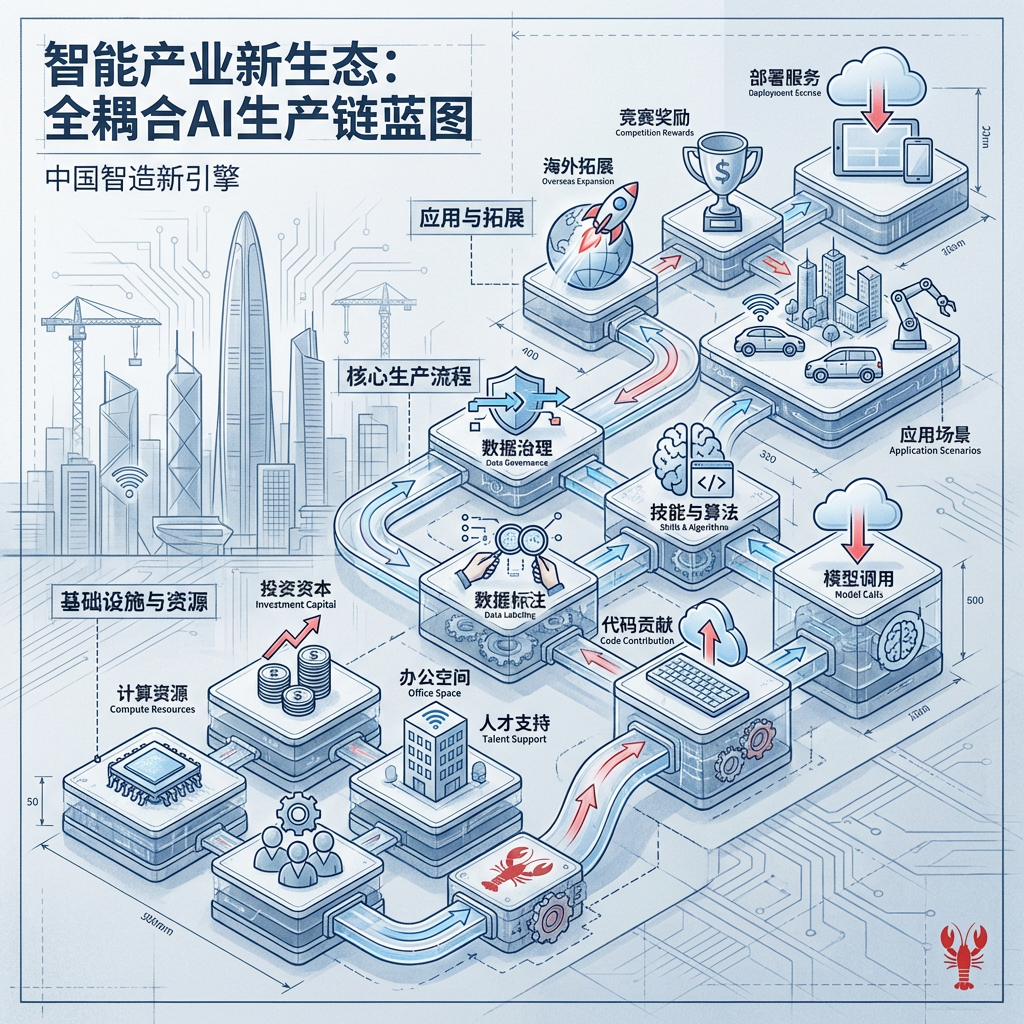
This isn’t “subsidising an app” any more; it’s laying down a chain. More importantly, the chain doesn’t serve IT projects in the traditional sense. It serves a much closer-fitting way of producing: systems that run alongside people, processes, the business and its feedback, ideally online around the clock, constantly absorbing experience and constantly getting stronger.
So what Longgang supports isn’t an abstract idea of AI. It is coupled AI production systems entering real workplaces. That goes far deeper than “encouraging companies to use AI”.
03 The new relation of production: the change is in how people, systems and processes connect
Over the past two years, many people got used to treating AI as a tool: drafting outlines, polishing articles, generating images, translating, summarising. All very useful. But most of this is still “ad hoc invocation”: you ask, it answers; you click, it generates; you close the window and the collaboration is over.
Systems like OpenClaw bring change at another level.
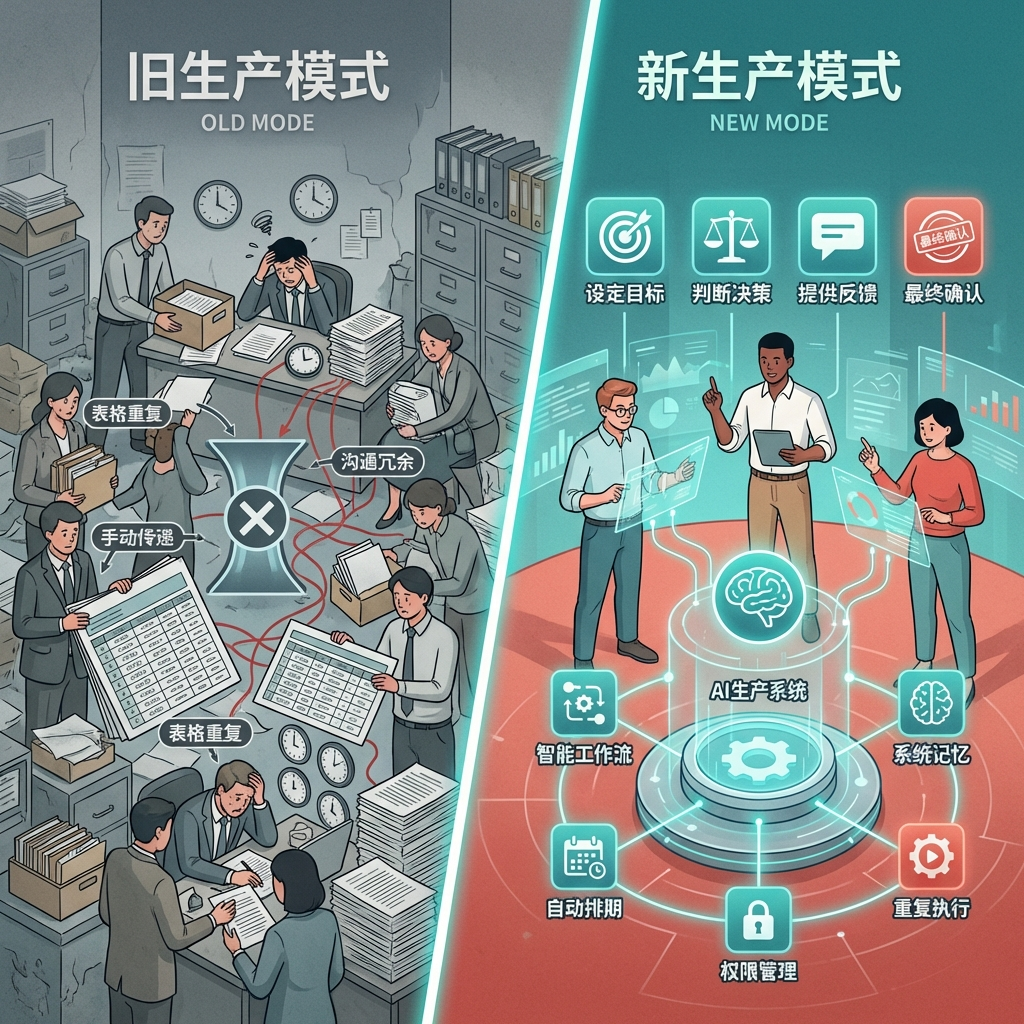
They start to genuinely plug into the work environment. They can call tools, hold permissions, read context, handle continuous tasks, turn a one-off action into a skill, and use cron (scheduled jobs) and workflows to take over production actions that are repetitive and fragmented but very valuable.
Once a system enters the process, the change is no longer just about efficiency. The division of labour shifts with it. How a task got done used to depend mainly on who did it; increasingly, it will depend on how people, systems and processes are orchestrated.
That’s what I mean by a “new relation of production”. It’s not an extra AI icon in the office. It’s that the way work is organised is starting to change.
04 Capabilities once gained by adding headcount are being reassembled into AI workflows
Many teams used to be inefficient not because they didn’t work hard or weren’t smart, but because of the cost of organisation:
content needs someone to pick topics, research, write, edit, lay out and distribute;
operations need someone to watch the data, handle customer service, collect feedback and update processes;
projects need someone to track milestones, chase people, sync up and report.
Every one of these matters, but they share a trait: they’re fragmented, scattered, heavy and especially costly to coordinate. What makes coupled AI production systems powerful is that they start to pack these capabilities, which used to require sheer headcount, back into workflows.
This doesn’t mean “people are no longer needed”. On the contrary, people will become more valuable; it’s just that where the value lies is shifting. What will increasingly command a premium is setting goals, making judgements, giving feedback, tuning systems and owning the results. The long middle stretch of repetitive execution, shuffling between processes, organising information and handing off tasks will be handed to systems more and more.
That’s also why Longgang’s policy touches development, data, models, compute, scenarios, talent, financing and overseas expansion all at once. When change lands at the level of relations of production, it never affects a single job; it moves an entire chain.
05 What’s truly scarce is no longer just talent, but the ability to wire AI systems into a closed production loop
In the end, what separates winners from losers may not be company size, or even model strength.
What matters more is who wires these systems into their own production loop first.
For individuals, the gap will show in whether they keep handing their context, habits, preferences, knowledge assets and toolchain over to a system;
for small teams, in whether they systematise repetitive processes and turn collaborative experience into assets;
for companies, in whether they actually wire systems into the business, rather than stopping at pilots, demos and slide decks.
Many people think this round of competition is about models first. My view: models matter, of course, but they will become ever more widespread. What really opens the gap is who first tames a model into part of their own production chain.
On one side, AI invoked on an ad hoc basis;
on the other, AI production systems coupled for the long term.
The former mainly brings incremental efficiency; the latter directly rewrites the structure of productive capacity. They’re not in the same league.
06 Once institutions recognise this capability, survival of the fittest happens not only between companies
Once a place starts systematically supporting this relation of production, what follows isn’t hard to predict.
The first change is opportunity.
Around OpenClaw and OPC, a new crop of opportunities will keep emerging: development, deployment, training, data services, model usage, compute scheduling, smart hardware, scenario integration, overseas services, process redesign and organisational consulting.
The second change is stratification.
Everyone “uses AI”, but the results will diverge more and more.
Some just gain a tool;
some start to own a long-term coupled production system;
some save a few hours;
some are already rewriting the productive capacity of their team and company.
Barriers will fall, and gaps will open up all over again.
The third change is regional competition.
Longgang appears to be supporting “lobsters”, but what it’s really competing for is the next generation of entrepreneurship and collaboration. Whoever takes on this AI-native way of producing earliest is more likely to attract projects, talent, capital and new kinds of organisation. Today it’s Longgang; more cities, parks and industries will very likely follow.
07 The subsidy is only the beginning; stratification is the consequence
Back to the title. If Shenzhen paying people to raise “lobsters” is understood only as a new subsidy, a new trend or a new talking point, its importance is being underrated. Its larger significance is that a new relation of production, once scattered, avant-garde and somewhat experimental, has for the first time been seen by institutions.
The signal from this document is clear: the old way of producing is loosening, and a new way of collaborating has taken its seat at the table.
What’s really worth watching next isn’t just where the subsidies are, who can apply and who gets the windfall first. The more important questions become:
- who restructures their way of producing first;
- who wires systems into a real closed production loop first;
- who turns the tool dividend into an organisational dividend;
- who takes a seat at the table before the new relation of production takes shape.
Because the subsidy is only the beginning. What will leave a lasting mark is stratification, restructuring, and a new order of collaboration slowly growing into place. That is the really big story behind “raising lobsters”.